01 Clarify the brief
Resolve open items on coating, color, quantity and destination before circulating the RFQ. A color family name without a retained reference delays later approval.
FREE sourcing support and up to 3% coordination support for qualified business buyers. Eligibility applies to qualified business buyers and is confirmed after we review your product, quantity, destination, and sourcing requirements.
Fabric selection desk
SwatchHorizon Procurement is an independent sourcing partner. It helps US business buyers turn a spradling reference into measurable composition, coating, weight, usable width and sample questions. This site is not spradling and has no affiliation or authorization from that brand.
Send a fabric brief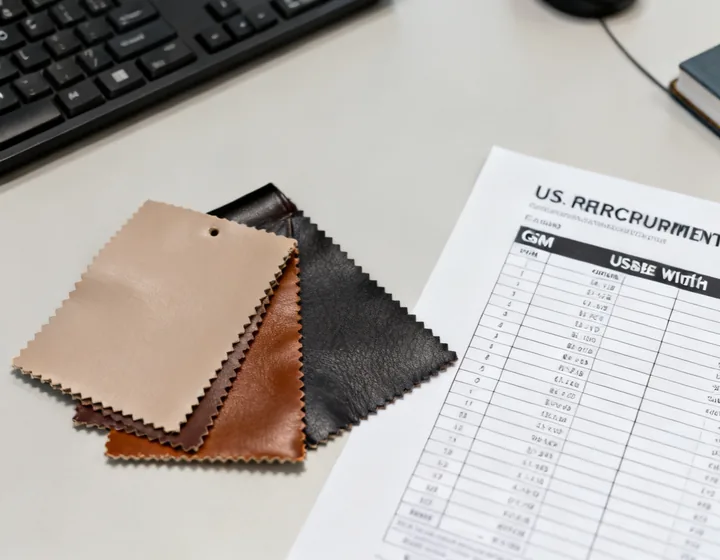
Search volume for a brand name is not textile-only demand. Use the reference to start a comparable RFQ, then confirm any proposed article with samples and method-bound evidence.
The working family is Synthetic Leather and Coated Fabrics. Inquiry cards on the catalog are generic configurations, not branded stock or verified equivalents.
| Material | Use | Input needed |
|---|---|---|
| Coated upholstery fabric | Seating and interior covers | Substrate, coating chemistry, abrasion basis |
| Synthetic leather sheet | Cut-and-sew panels | Thickness, hand feel, hydrolysis requirement |
| Microfiber upholstery material | Softer contact surfaces | Pile, backing, cleaning chemistry limits |
Open inquiry configurations to start a quote request without treating those names as available inventory.
Supplier matching starts with product use and acceptance criteria. Indoor seating, marine covers and industrial conversion do not share the same hydrolysis, abrasion or cleaning assumptions. Record contact conditions, sewing process and visual target before asking for a mill quote.
Send a fabric briefState the material family, end use, composition or coating, construction, weight, usable width, color, finish, quantity with unit, US destination, sample stage and the documents you need for the exact proposed article. Leave unknown fields open instead of converting guesses into specifications.
We collect a comparable brief, request factory quotations against that brief, and keep deviations visible. Matching is not mill authorization, inventory reservation or a claim that an alternative is identical to a named commercial line.
Agree a retained swatch, lab dip or physical standard, plus lighting and lot-to-lot shade rules. A color name copied from a third-party collection is not an approval record.
Compare price only after fiber composition, fabric construction, GSM, usable width, finish, packaging, freight, duties, sampling charges, testing and payment terms share the same basis. Usable yield can change the delivered cost even when the unit price looks lower. Stock programs can shorten sampling when those fields already fit; custom development is the route when knit gauge, coating chemistry or topcoat must change.
Name the laboratory, method, edition, specimen and acceptance owner in the RFQ. A method title on a catalog sheet is not a result for the bulk lot you will receive.
Coated fabrics change yield when usable width, coating weight or backing differs. Ask each supplier to answer the same input list and to mark exceptions.
| Input | Supplier response |
|---|---|
| Composition and construction | Confirm substrate, knit or woven base, and coating chemistry, including deviations |
| Finishing | State topcoat, grain, antibacterial or marine finish scope |
| Weight, thickness and usable width | Give measured basis, tolerance and whether width is usable or overall |
| Abrasion and hydrolysis | Bind any claim to method, edition and specimen, or mark as untested |
Resolve open items on coating, color, quantity and destination before circulating the RFQ. A color family name without a retained reference delays later approval.
Record which mill answered which field, which costs are excluded, and which sample stage they can support. Do not treat a faster promise as a confirmed lead time.
Separate stock swatch, lab dip, strike-off and pre-production sample. None automatically represents the bulk dye lot.
Write inspection sampling, shade-lot policy and document list before shipment. Certificates must name the exact article, not the sourcing desk.
Do not treat a supplier certificate as a site-owned credential. Ask for current documents tied to the quoted article, issuing body, site and date.
Terms are confirmed per supplier and order. Share the reference, specification, quantity and US destination to request factory quotes.
Qualified business buyers may receive FREE sourcing support and up to 3% coordination support. Eligibility applies to qualified business buyers and is confirmed after we review your product, quantity, destination, and sourcing requirements.
This is not a discount, a price-floor claim, or a limited-time offer.